
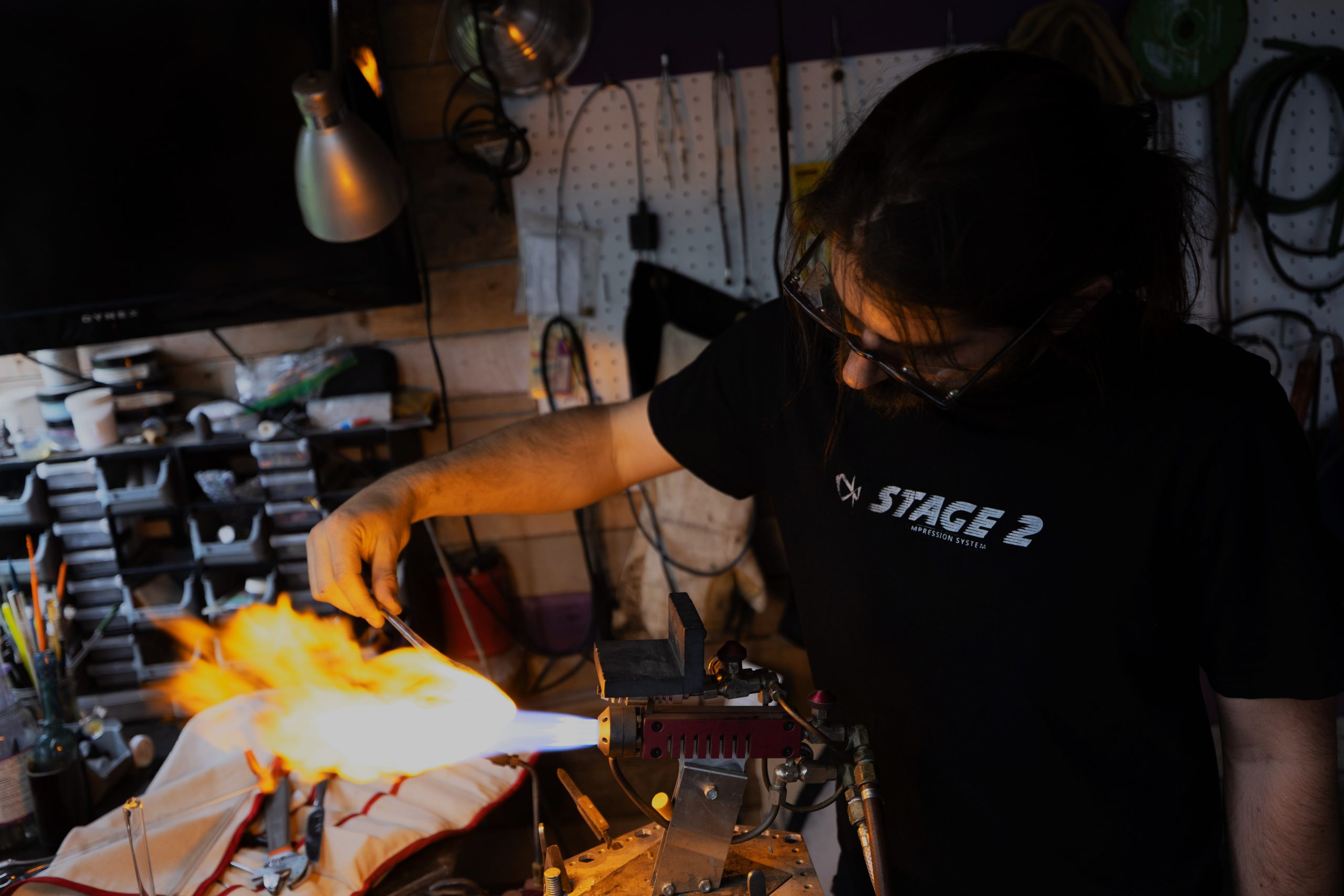
For glass artists working with borosilicate, especially those creating functional art like pipes, managing fuel and oxygen usage is critical—not just for cost efficiency, but also for studio safety and planning. One of the most common questions among lampworkers is: How much oxygen do I actually use in a typical day at the torch?
In this article, we break down daily oxygen consumption based on real-world torch settings and work habits of borosilicate artists.
Understanding the Tools: Torches and Flow Rates
Most borosilicate artists use surface-mix torches like the GTT Phantom, Carlisle CC, or Nortel Red Max. These torches vary in oxygen demand, but they generally operate in the following range:
- Small flame (detail work): 5–10 liters per minute (LPM)
- Medium flame (marbles, medium tubing): 15–25 LPM
- Large flame (heavy prep, large tubing or tubing seals): 30–50+ LPM
Let’s take an average working flame of 25 LPM as a baseline. This is typical for medium-sized work, such as pipe-making, with some variation during the day for fine detail or heavy seals.
Daily Burn Time: Realistic Torch Usage
Although a glassblower might be in the studio for 6–10 hours a day, the torch isn’t necessarily running continuously. Allowing for prep, annealing, cleaning, and breaks, let’s assume 5 hours of active flame time in an 8-hour workday. This is a conservative and realistic estimate.
Daily Oxygen Consumption Estimate
Here’s how the math works out:
- Flow rate: 25 LPM
- Time: 5 hours = 300 minutes
- Total Oxygen Used:
25 LPM × 300 minutes = 7,500 liters of oxygen per day
That’s 7.5 cubic meters, or approximately:
- 265 cubic feet (cf) if you’re measuring in standard US units
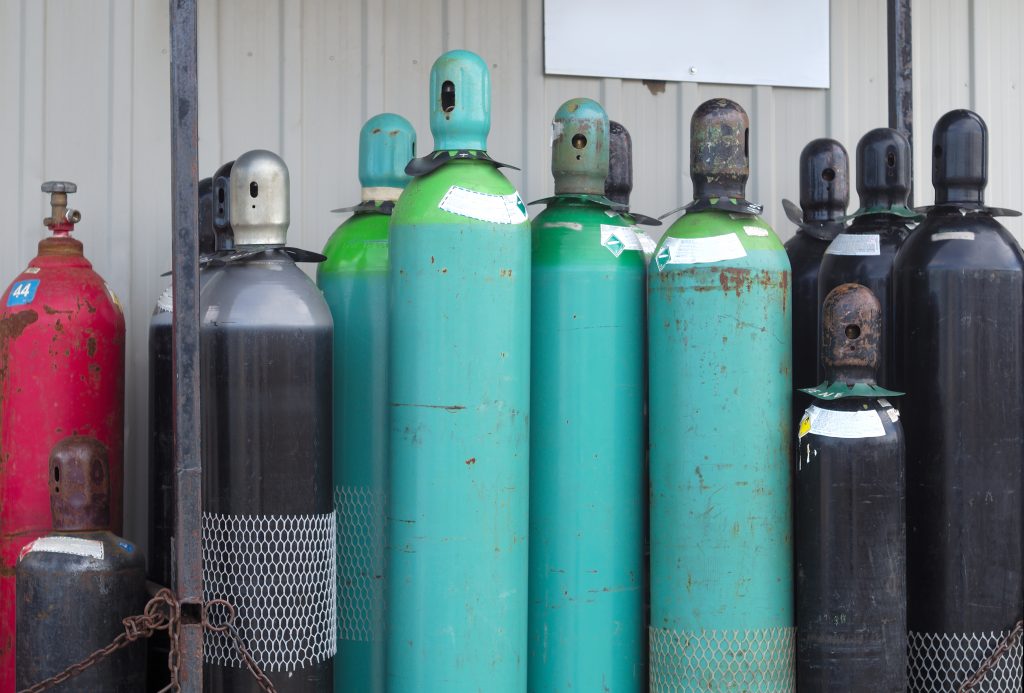
For reference, a common K-size oxygen cylinder holds about 244 cubic feet, meaning one tank may not last a full day of work at this usage level. That’s why many artists switch to oxygen generation systems for cost and convenience.
Real-World Tips from Experienced Glassblowers
- Use a flowmeter to measure your actual usage if you want precise data for your studio setup.
- Optimize torch efficiency by avoiding unnecessary large flames and keeping your torch clean.
- If you’re on bottled oxygen, plan for multiple cylinders per week or invest in an oxygen concentrator or LOX dewar.
- Batch your work—do prep work like tube cutting and shaping with lower flames or during times when oxygen usage can be minimized.
- Invest in a generated oxygen system—whether its or Stage 2 system or not, a controlled concentrated oxygen system is a no brainer for most if not all borosilicate lampworkers. Once you try one, you’ll never go back!
Summary
| Factor | Typical Value |
| Torch Flame Rate | ~25 LPM |
| Burn Time per Day | ~5 hours (300 minutes) |
| Daily O₂ Consumption | ~7,500 L (265 cf) |
| Equivalent to | ~1 full K-cylinder per day |
Whether you’re a seasoned lampworker or just setting up your studio, understanding your oxygen needs is crucial for both safety and efficiency. Keeping tabs on your torch usage and optimizing your setup can help keep your studio running smoothly—and your art flowing freely.
Ready to Step-Up Your Oxygen?
The Stage 2 is the perfect solution to save borosilicate glass artists huge on their oxygen bills. By cutting costly deliveries and refills you can also focus more on what matters.
Learn more about our Oxygen Systems here.
Curious how long your torch can run on concentrated oxygen?
Check out our Oxygen Runtime Calculator to know how long your torch could run on a Stage 2 paired with as few as one Stage 1 and a Storage Tank.
Leave a Reply