
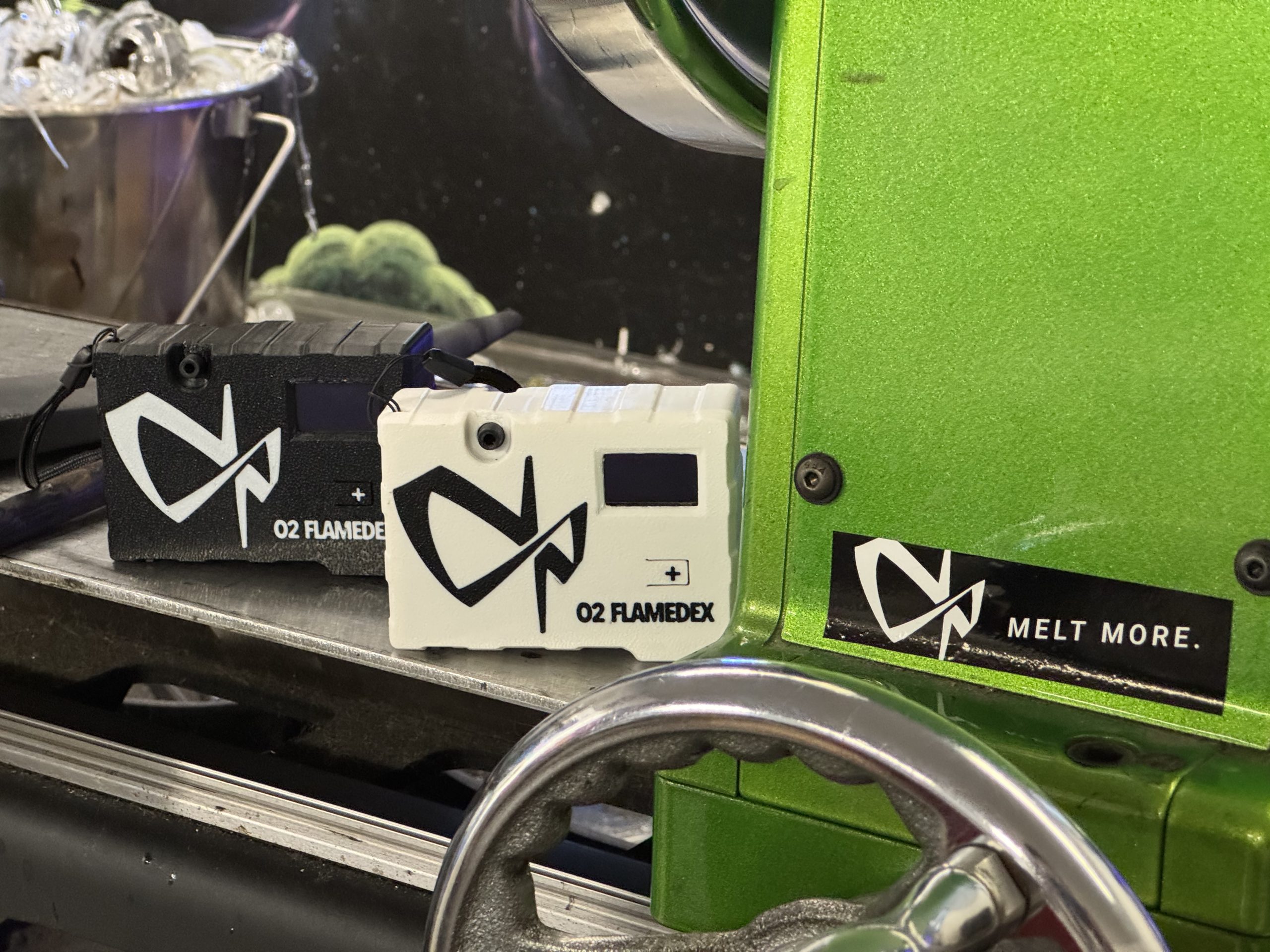
Introducing: The O2 Flamedex! View oxygen purity and resulting maximum flame temperatures in Celcius and Farenheit. Runs on 3xAA batteries.
When it comes to oxy-fuel cutting and welding, oxygen purity isn’t just a number — it’s the backbone of consistent performance. If oxygen purity dips, flame temperature drops, cut quality suffers, and operations become less efficient. Traditionally, ensuring that purity meant relying on expensive and maintenance-heavy analyzers. That’s about to change.
DPG Supply is proud to introduce a new, lower-cost oxygen purity meter built on self-calibrating ultrasonic technology. This innovative approach provides reliable readings for PSA oxygen purity monitoring used in torch applications — without the complexity or cost of legacy analyzers.
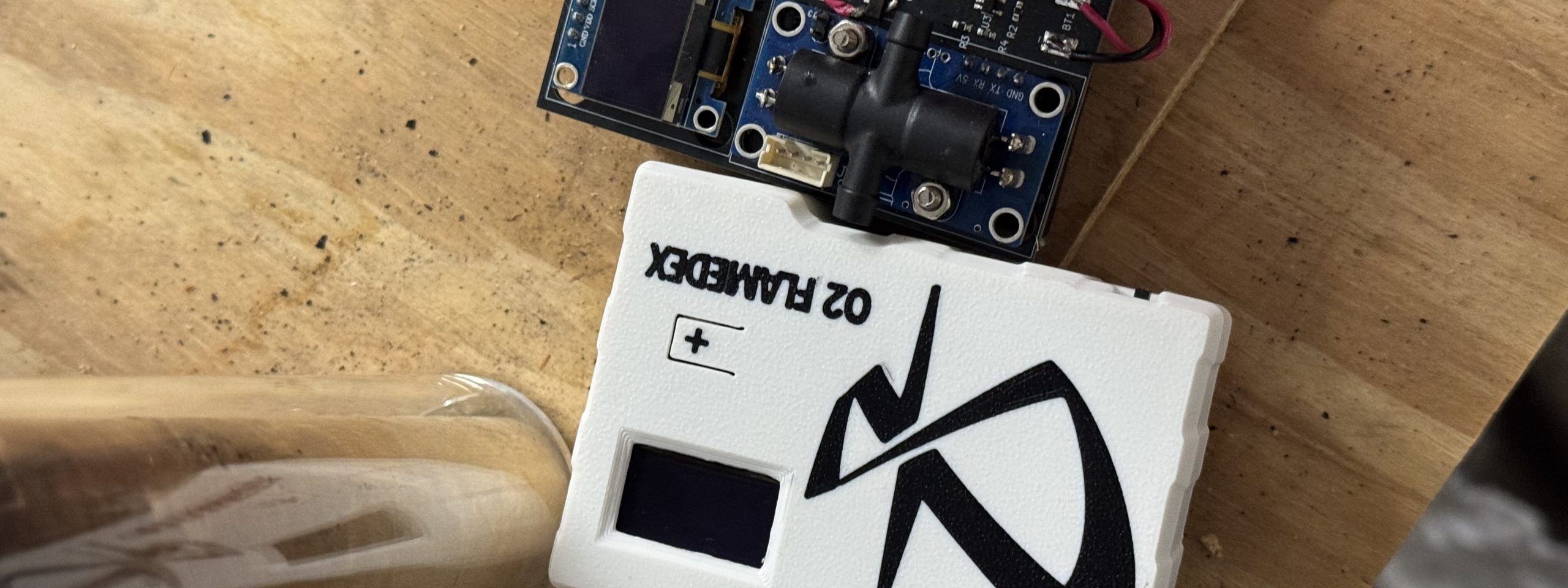
Understanding Oxygen Purity Measurement Technologies
Before diving into why ultrasonic is a game-changer, it helps to understand the conventional technologies used to measure oxygen purity and why they can be expensive to own and operate.
1. Electrochemical / Galvanic Sensors
Electrochemical sensors, often found in medical and industrial oxygen analyzers, use a chemical cell to generate a current proportional to oxygen concentration. While relatively affordable, these sensors have a limited lifespan — they consume their internal electrolyte over time and require regular calibration and replacement.
- ✅ Low initial cost
- ❌ Drifts over time and needs recalibration
- ❌ Temperature and humidity sensitivity
- ❌ Consumable sensor elements increase lifetime cost
2. Zirconia (Solid-State) Sensors
Zirconia cells measure oxygen concentration using a heated ceramic element. These analyzers are fast and reliable in high-demand industrial settings, but the heater, precision control electronics, and calibration routines make them costly and more complex.
- ✅ High temperature stability and fast response
- ❌ Expensive materials and build
- ❌ Requires stable reference gas and periodic calibration
- ❌ Best suited for gas plants or lab environments
3. Paramagnetic & Lab-Grade Analyzers
Paramagnetic analyzers detect oxygen’s magnetic susceptibility and provide high precision but come with high upfront costs, sensitive components, and the need for expert maintenance. Even more complex are mass spectrometry or gas chromatography systems — incredibly accurate, but completely impractical for day-to-day torch work.
- ✅ Excellent accuracy and fast response
- ❌ High cost and complexity
- ❌ Requires controlled environments
- ❌ Overkill for PSA oxygen applications
Why Ultrasonic Modules Are Changing the Game
Unlike the technologies above, ultrasonic oxygen purity meters work by measuring the speed of sound through the gas. Because oxygen and nitrogen have different acoustic properties, the device can accurately determine the oxygen concentration by analyzing transit time.
Our new ultrasonic oxygen purity meter takes advantage of this principle — but with a modern twist: it self-calibrates, minimizing drift and eliminating the need for expensive sensor replacements.
Key Benefits of Ultrasonic Measurement
- No consumables: Nothing to replace or degrade over time.
- Self-calibrating: Maintains accuracy with minimal user intervention.
- Lower cost: Simpler components mean more affordable pricing.
- Low maintenance: Ideal for shop or field use.
- Durable: Resistant to moisture and vibration, making it perfect for PSA systems.
In PSA torch applications, where oxygen purity typically falls between 90 % and 96 %, this level of precision is more than sufficient to ensure consistent cutting and welding performance in glass — at a fraction of the price of zirconia or paramagnetic analyzers.
Accuracy Where It Counts
One common misconception is that lower cost means lower performance. In fact, for most torch work applications, ultra-high precision (±0.1 %) isn’t necessary. A device that can reliably differentiate between, say, 60 %, 75 %, and 95 % purity will deliver actionable insights and ensure optimal torch performance.
- PSA systems already have a known operating purity range.
- Oxy-fuel heating has a generous tolerance window.
Even if the absolute accuracy is ±3 %, your readings remain fully fit for purpose. And because the unit self-calibrates, drift is minimized — no electrode wear, no recalibration gases, no consumable parts.
Lower Cost, Longer Life
Traditional oxygen analyzers can require sensor replacements every 12–24 months and frequent recalibration. Our ultrasonic oxygen purity meter is designed for years of operation without consumable parts, which means:
- ✅ Lower total cost of ownership
- ✅ Less downtime
- ✅ Less user training required
This makes it an ideal fit for small shops, field service providers, and mobile oxygen systems — anyone who needs reliable purity measurement without breaking the bank.
Visit our Products page to see the full line of gas analysis solutions.
Designed for PSA Oxygen and Torch Work
Our ultrasonic purity meter isn’t trying to compete with laboratory-grade analyzers. Instead, it’s optimized for the PSA oxygen systems commonly used in cutting, brazing, and welding. In these environments, what matters most is:
- ✔ Consistent readings in the 90–96 % range
- ✔ Minimal maintenance
- ✔ Simple operation
And that’s exactly what our self-calibrating ultrasonic module delivers.
Get Early Access
We’re excited to bring this new technology to the field. If you want to reduce costs, simplify operations, and get reliable purity measurement for your PSA oxygen system, our ultrasonic oxygen purity meter is the perfect fit.
Contact us today to reserve your unit or learn more about our upcoming release.
Learn more about PSA oxygen systems and how they integrate with torch setups.
Leave a Reply