Author: dpgroup

  • Preparing a Second-Hand Tank for O₂ Storage

    Preparing a Second-Hand Tank for O₂ Storage

    When acquiring a second-hand steel tank for high-purity O₂ service, internal corrosion, residual oils or grease, and flash-rust pose safety and performance risks. This post outlines a validated method for bringing those tanks into service readiness, adapted for oxygen storage applications. It combines degreasing, rust-removal/conversion and proper preparation for subsequent filling.


    Why Internal Cleaning Matters

    Steel storage tanks that have been used, modified or idle may contain:

    • Internal rust or flash rust (even thin iron-oxide layers)
    • Residual oils, grease or machining/welding waster
    • Moisture or contaminants that could accelerate corrosion or pose ignition or reactivity risks under enriched-oxygen conditions

    These issues are especially significant for O₂ service: any hydrocarbon film, moisture or loose scale inside the tank increases hazard potential. Ensuring the internal surface is clean, dry, and in a stable state is key.


    Step 1: Degrease & Remove Oils

    Before any acid or rust-conversion step, remove oils, grease or organic contaminants. For example:

    • Use a degreasing wash such as Simple Green or an industrial-grade alkaline degreaser, fill/flush the tank, agitate, and rinse.
    • A coin operated car wash is a good place to gain access to a space to blast an old tank clean.
    • Ensure that after degreasing the water rinsing out is clean and that no foaming or oil film remains.
    • Dry as much as practical before rust-treatment.

    This step matters because residues interfere with later acid conversion, may trap moisture, and under oxygen service could lead to reactivity. In industrial rust-bath literature it is consistently recommended to degrease first. – ChemCafe


    Step 2: Rust Conversion / Removal

    Once the interior is degreased and rinsed, proceed with a phosphoric-acid based treatment (or a product such as Ospho) to convert or remove internal rust.

    Phosphoric Acid Method

    Warning: Phosphoric acid can burn skin and eyes and will damage surfaces if spilled. Use proper PPE and mix it safely by adding acid into water. The instructions here are based on common industry practice but may not be suitable for every situation. Always confirm the procedure fits your equipment and follow your local safety and disposal rules. You’re responsible for your own safe handling and use.

    Simple Dilution Guide for 85% Phosphoric Acid

    These mixes are designed for 1 gallon of working solution.
    Always add acid into water, not the other way around.

    Make as many gallons as required for your size tank. We recommend mixing up 1/6 to 1/4 the volume of your tank as phosphoric acid solution.


    Heavy Rust / Scale

    Purpose: Thick rust, scale, long-neglected tanks.
    Strength: Stronger mix.

    • Start with 1 gallon of water
    • Then add 1 cup of 85% phosphoric acid

    This gives a strong solution appropriate for stubborn internal rust.


    Moderate Rust

    Purpose: Noticeable rust, but not heavily scaled.
    Strength: Medium.

    • Start with 1 gallon of water
    • Then add ½ cup of 85% phosphoric acid

    Good all-around cleaning strength for most used tanks.


    Light Rust

    Purpose: Uniform surface rust, no pitting.
    Strength: Mild.

    • Start with 1 gallon of water
    • Then add ¼ cup of 85% phosphoric acid

    Great for cleanup after storage or when a tank has a light orange film.


    Flash Rust Only

    Purpose: Tanks that were clean but flash-rusted during drying.
    Strength: Very mild / conversion-only.

    • Start with 1 gallon of water
    • Then add 2 tablespoons of 85% phosphoric acid

    Application of Phosphoric Acid Solution to Convert and Inhibit Rust

    With your solution prepared, proceed with the following:

    • Fill the tank partially (e.g., ~¼–⅓ of internal volume) with the solution, plug the valves and ports, and rotate/tumble the tank so the solution wets the entire internal surface. Time depends on severity (e.g., 15–30 minutes).
    • Drain the solution (capture for reuse or disposal per local regulation).
    • Hot-water rinse thoroughly until the tank walls feel warm and the internal surface is well rinsed.
    • Dry immediately, using clean, dry, oil-free air (or dry nitrogen) and rotate/roll the tank as drying proceeds. Inverting the tank to blow moisture down can help speed the process up.
    • Inspect interior visually (and optionally with borescope) for clean grey/white surface or residual dark phosphate film first
    • After drying, install valves and fittings.
    • Finally, purge or flush the tank with inert or service gas (e.g., ambient air or N₂) a few times (fill-dump cycles) to remove residual moisture/air before O₂ fill.

    Commercial Version of the DIY Phosphoric Acid Treatment: Ospho
    Ospho is a commercial rust-converter product that uses phosphoric acid plus wetting-agents and extenders. It converts rust to iron phosphate rather than aggressively dissolving it. Key features:

    • According to manufacturer, it “safely dissolves bleeding rust … converts iron oxide to iron phosphate … produces a dry, powdery grey/white surface when cured.” ospho.com
    • It is best applied after cleaning off loose scale, dirt, grease.

    Step 3: Optional Film-Forming/Corrosion-Inhibitor Compounds

    Compound O Oxygen Safe Rust Inhibitor
    Oxygen Compatible Rust Inhibitor

    After degreasing and rust conversion/removal, some operators apply a thin film corrosion-inhibitor or amine-based treatment. One compound class worth noting is diethanolamine (DEA / DEOA) — sometimes referenced generically as “Compound O” in industrial metal-processing contexts.

    • Diethanolamine is a secondary amine/diol which is used industrially as a corrosion inhibitor and surfactant in metal-working fluids. Third Coast Chemicals
    • Its function: it can form a protective amine film on cleaned metal surfaces, reduce re-oxidation (flash rust) during storage, and improve wetting/adhesion of further coatings.
    • If used, it must be compatible with oxygen service: the film must be free of oils, solvents or hydrocarbon residues – Compound O is, but not all DEA compounds are.
    • The procedure would be: after acid rinse and hot‐dry, apply a very light amine film (in controlled manner), then purge/flush before O₂ filling. Note: you must verify the film does not present an ignition hazard under high partial-pressure O₂ and is compatible with your system’s compatibility standards.
    • Because DEA is also flagged with safety/health concerns (it is listed as “possibly carcinogenic to humans” by IARC). Wikipedia
      Thus its usage must follow strong safety and compatibility review.

    Step 4: Final Drying & Preparation for O₂ Service

    Given the service is O₂ storage, the final drying, inspection and inert-purge steps are arguably the most critical.

    It’s important to note:

    • After cleaning and rinsing, the tank interior must be absolutely dry. Preferably use dry nitrogen or dry shop air that is filtered for oil/moisture and verify dew-point if possible.
    • Valve installation should use O₂-cleaned fittings, lubrication, and adhesives (if any) appropriate for O₂ service (no hydrocarbon oils) – Loxeal 85-86 is a great option.
    • After valve install, perform a purge/fill dump cycle with inert or ambient gas (e.g., three fill-to-service pressure and dump) to remove any remaining moisture or contaminants.
    • A thorough visual inspection with lighting or borescope of the interior surface to confirm no loose scale, no orange rust, no residual film that could react under O₂ service.
    • Document the entire preparation: date, tank ID, degreasing solution used, acid concentration, rinse volumes, drying time, purge cycles, inspection findings. This supports traceability and safety efforts.

    Summary

    By incorporating all four steps — degrease, rust-remove/convert, optional corrosion-film/amine treatment, and final drying/purge — you can bring a second-hand steel tank into a condition suitable for O₂ storage.

    Key takeaways:

    • Always remove oils/grease first.
    • Use phosphoric acid or an equivalent rust-converter (like Ospho) to stabilise rust.
    • Consider an amine-based film (e.g., DEA/Compound O) only if fully compatible with O₂ service.
    • Drying, purge, inspection and trace documentation are highly suggested for O₂ service safety.

    For help with your Oxygen System design and more expert advice, contact us today.

  • Fixing The Pressure of Oxygen Concentrators for Powering a Flameworking Torch

    Fixing The Pressure of Oxygen Concentrators for Powering a Flameworking Torch

    You’ve got your torch, propane, and concentrator – but that flame isn’t behaving like you know it should. Your oxygen supply is lacking but you’re not quite sure what’s wrong. Having the right oxygen supply is not only helpful, it’s absolutely required for the longevity of your torch face.

    This situation is all to familiar, particularly to flameworkers who transition from a small torch and oxycon setup, to a larger torch.

    “What works with a small torch, often leaves something to be desired on a larger burner.”

    Comparing a Nortel Red Max torch face to a Minor, you can see how much more space there is for oxygen and fuel to exit the face of a Red Max.

    It’s a simple matter of geometry. A larger torch face has more openings and so requires more flow to produce the same flame velocity and characteristics. This important contributing factor to productive and efficient lampwork is what our core offering of oxygen technology products aim to fix.

    Small Torches, Small Studios, and Small Budgets

    With small torches, studios and budgets, there are not a whole lot of available options for the lampworker – but you’re in a much better position than a lampworker with a large torch, or studio and a small budget. You can melt boro and soft glass with just a concentrator if you operate a torch that consumes a small volume of O2 per minute.

    If you’re running a small torch (more on that below) you can often build a working oxygen system around one or two oxygen concentrators. Concentrators usually come in 5, and 10 liter per minute models. Often times, jewelers and bead makers are able to use a single 5 or 10 LPM machine to run their torch. Just make sure to leave the oxygen valve on your torch cracked to provide an outlet for the oxygen concentrator, ensuring O2 purity stays high.

    Adjustable pressure relief vent 0-20 PSI for simple O2 setups.

    You can skip leaving your O2 valve open if you have our Adjustable Pressure Relief Vent installed between your concentrator and torch.

    Concentrators are usually configured to output a pressure of 4-10psi, depending on the make and model. Some specialty machines, like our Stage 1 – 10 LPM Oxygen Concentrator are capable of output pressures of up to 20psi.

    We’ll delve into why higher pressure and flow translate into more control behind the torch later on in this article.

    Torches and Flow Rates

    Selecting the right concentrator can be tricky, and not all concentrators produce the same amount or pressure of oxygen. A good starting point is our chart of torch specifications available here:

    Once you know your torch O2 consumption and it’s upper limits, you can begin to select the components of your O2 generation system.

    Why Run Higher Pressures?

    Simply put, higher pressure means higher fidelity of flame control. When we put higher pressures, and in turn higher flow rates behind a valve it increases the range of pressures and flows available to the torch.

    Increasing flow and pressure will make the needle valve knobs of a torch feel much more sensitive, and what would have previously taken several turns of the knob will now be a fraction of a turn. Think of it like going from a sluggish old beater, to driving a speedy and responsive sports car – reaction and performance are hardly comparable. Pedal to the medal actually gets you somewhere when you have the performance to match.

    How to boost the pressure of an Oxygen Concentrator – Zero Cost Option

    Most concentrators have an internal regulator that is turned down to a pressure that makes the device safe for use in a therapeutic or medical setting. We aren’t using these machines with that intent, and so boosting output pressure to more than double for no additional expense (besides labour) is a great idea for lampworkers.

    To do this, you will need to open the case of the device to gain access to the internal regulator.

    On the Stage 1, this is done by removing four Phillips head screws from the bottom of the machine and lifting off the plastic shell. Once inside, you’ll find the devices accumulator and the attached regulator.

    Regulator to boost pressure of Concentrator
    Stage 1 Oxygen Concentrator Internal Regulator can be adjusted with 6mm Hex wrench. 0-20 PSI

    Insert a 6mm hex wrench into the set screw in the bottom of the devices regulator and turn the screw clockwise, sending it inwards. Turning this screw all the way in will bring the outlet pressure of the concentrator up to 18-20 psi.

    This simple fix is often enough to meet the demands of a small torch setup. If you’re looking for more, we have two more low-cost O2 system improvements before we get into fully managed intelligent Oxygen Systems.

    Simple Tricks to Add Ease to Your Torch Workflow

    As we mentioned earlier in this article, adding an adjustable vent to your oxygen delivery system can simplify your experience behind the torch. Allowing you to fully close the valves of your torch, the adjustable vent will allow your system to accumulate O2 and some pressure before allowing excess to bleed off to atmosphere.

    By pairing a vent assembly and a small holding tank, users of a small torch can benefit from boosted and stabilized supply of O2 at their torch.

    Still not enough Oxygen?

    The next logical step is to increase the storage capacity for your low-pressure accumulation system. More storage is equal to a larger headstart in the race against a dwindling supply when a torch draws more O2 per minute is being produced.

    If increasing storage and pressure to 20 psi still aren’t enough, that is where high flow systems like the Stage 2 Compression System come into studio design.

    Compressors – High Flow or High Pressure?

    The natural answer to the limitations presented by an oxygen concentrator is a second stage of compression.

    There are a few options when it comes to compressing oxygen; and not just any air compressor will do. We require oil-free air compressors to boost the pressure of the oxygen in our systems.

    Many folks choose to DIY their systems, with plans and parts available in online groups, youtube videos and blog posts.

    Others use low flow rate, high pressure systems made for the medical industry called homefills. Both can work, but there is a superior system available for lampworkers.

    Stage 2 Compression Controller and Oxygen Management System

    Stage 2 Systems deliver High Flow and Pressure Oxygen from Oxygen Concentrators

    Some torches can get by on 20PSI and 10 or 20 LPM, but most boro lampworkers and hot shops simply cannot generate enough heat in a moment when limited by supply figures like that.

    In a production shop, we typically see line pressures of around 100 PSI and torch delivery pressures up to 65 PSI for Oxygen. Averages at 15-35 PSI for most torches are still above the pressure range that standard oxygen concentrators can deliver.

    Our Stage 2 systems can deliver the flow rates and pressures of a high demand glass studio. With a whisper quiet compressor delivering 105 PSI line pressure, and managing up to 8.0 liters per minute of production – the Stage 2 is the simple solution to boosting oxygen flow and pressure.

    Typical Production Lampworker’s Setup, 20 LPM of O2 Production and 120 Gallons of O2 Storage.

    Most hobbyist lampworkers don’t need the production volumes made possible by our Pro model, which is why we offer the Duo and Solo models. These more affordable models deliver the same boosted pressure, without as much control or delivery capability. Simpler setups for less demanding applications.

  • What is The Proper Name of Oxygen and Gas Fittings for Torch Hook Up and Connections

    What is The Proper Name of Oxygen and Gas Fittings for Torch Hook Up and Connections

    While helping a commenter on Facebook’s Torch Talk Group find the correct fittings for connecting a Mad Hatter manifold to a flashback arrestor, I recognized that the cryptic names and numbers of torch connection fittings can be a bit daunting to the uninitiated.

    If you are looking for the name of the fitting to connect manifolds, plumbing, flame arrestors and other fittings to weld hoses and torches – look no further:

    CGA-022-B for Oxygen connections to torches

    CGA-023-B for Fuel connections to torches

    Understanding how CGA fittings are named isn’t just for engineers — it’s critical for anyone working with gas cylinders, regulators, or torches. The CGA system provides a standardized way to match fittings to their correct gas service, preventing dangerous cross-connections and costly downtime. In this guide, we’ll break down the CGA-023 B fitting as an example, explain what each part of the code means, and provide a practical chart of common CGA connections so you can make confident, safe selections for your equipment.

    Understanding CGA Fitting Nomenclature — Breaking Down CGA-023 B

    When working with gas cylinders, regulators, and hoses, every detail in a fitting’s label matters. Take CGA-023 B for example: here’s what each component tells you, and why it’s vital for safety and compatibility.


    1. CGA — the standard behind the name

    “CGA” stands for Compressed Gas Association, a U.S. organization that defines standard connection patterns for cylinder gases so that equipment from different manufacturers can interface safely. These connection standards (often referenced in CGA’s V-1 standard) prevent mis-mating of dissimilar gases.

    In other jurisdictions or industries, you might see alternative systems (e.g. DIN, ISO, or European cylinder standards), but in North American gas supply and welding/gas fitting practice, “CGA” is the dominant convention.

    These standards map each gas (or gas family) to a specific connection code, so you can’t accidentally connect, say, an oxygen hose to a fuel cylinder with the wrong threading or shape.


    2. 023 — interpreting the numeric code

    The number “023” designates a specific connection geometry under the CGA system. In the case of CGA-023, you are looking at the B-size, left-hand thread fuel gas fitting. More precisely:

    • The “02x” family of CGA codes generally refers to B-size connections in the CGA V-1 list, suitable within a certain pressure and application envelope.
    • The difference between 023 and 022 is critical:
       • CGA-022 is the right-hand, B-size fitting intended for oxygen service. Its threading is .5625-18 UNF, RH.
       • CGA-023, conversely, is left-hand, same B-size geometry, reserved for fuel/combustible gases, so that a fuel regulator can’t be (mistakenly) attached to an oxygen cylinder.
    • More broadly, numbers in the CGA chart map to particular gases or gas classes (oxygen, inert, fuel, toxic, etc.) and thread styles. For instance, CGA-580 is common for inert gases like nitrogen or argon under high pressure.

    So, seeing “023” immediately flags to a trained user that it’s a fuel-gas, left-hand B-size interface.


    3. B — the size class

    The trailing letter (A, B, C, D, etc.) in a CGA designation refers to the size class of the fitting — essentially a shorthand grouping of thread diameter / flow capacity categories. In practice:

    • B-size is one of the more common classes for welding or small industrial fuel and oxygen lines. Because it balances adequate flow and compact form, many regulators, hoses, and torches are built around B-size fits.
    • There are C-size, D-size, and other variants in CGA’s universe (for higher flow or special uses), but in many small shop or torch setups they are less frequently encountered — so “B” is a practical default.
    • Not every CGA code uses all size letters. Sometimes the size designation is implicit in the number (e.g. CGA-580 is by convention a B-size geometry in many implementations).
    • When checking or ordering fittings, the letter helps ensure you’re matching the regulator, hose, or cylinder side correctly — mismatches in size class (even if the gas code portion is right) can lead to leaks, pressure drop, or rejection at inspection.

    Quick Reference: Common CGA Codes

    CGA CodeGas Type / UseThread DirectionSizeTypical Application
    CGA-021Fuel gas (acetylene, propane)LH (left-hand)BFuel gas cylinders and torches
    CGA-022OxygenRH (right-hand)BOxygen regulators and torch equipment
    CGA-023Fuel gas (acetylene, LPG)LH (left-hand)BFuel regulator connection (B-size)
    CGA-320Carbon Dioxide (high pressure)RHVariousBeverage CO₂ systems
    CGA-540Oxygen (high pressure)RHIndustrial oxygen cylinders
    CGA-580Inert gases (N₂, Ar, He)RHShielding gases, nitrogen service
    CGA-346Compressed airRHShop air, breathing air systems

    Tip: Left-hand threads are typically identified by a notched hex nut or grooved fitting. If the fitting won’t start by hand, don’t force it — double-check the CGA code.


    Why These Codes Matter in Practice

    Choosing fittings by CGA code isn’t just about matching threads — it’s about ensuring gas service compatibility, safety, and compliance. A CGA-023 B fitting is intentionally incompatible with CGA-022 to prevent a potentially dangerous oxygen-fuel mix-up.

    When ordering, always confirm:

    • CGA number (gas/service)
    • Thread direction (LH vs RH)
    • Size class (B, C, etc.)

    This ensures that regulators, hoses, and cylinders work as a matched system, reducing the chance of leaks or catastrophic failure.

    Still have questions? Our expert system designers are happy to guide you:

  • Choosing the Right Oxygen Purity Meter for PSA Systems in Torch Work: Why We Built a Self-Calibrating Ultrasonic Option

    Choosing the Right Oxygen Purity Meter for PSA Systems in Torch Work: Why We Built a Self-Calibrating Ultrasonic Option

    If you use a PSA oxygen system for glass, metal, or flame work, you’ve probably wondered how to verify the purity coming off your concentrators and into storage. We’re introducing a lower-cost, self-calibrating oxygen purity meter that uses an ultrasonic module (speed-of-sound) rather than the typical electrochemical, paramagnetic, or zirconia techniques. This post explains the differences, where the cost savings come from, and why the accuracy trade-offs are a non-issue for PSA oxygen used in torch work.

    TL;DR: For Stage 2 compression + storage systems and similar PSA setups producing ~93–96% O2, an ultrasonic purity meter provides stable, maintenance-light readings without consumable cells—ideal for monitoring trends, diagnosing setup issues, and confirming system performance. If you’re chasing 99.9% O2 for spectroscopy or laser cutting, that’s a different toolbox; for flame work, ultrasonic is the practical win.


    First, context: What “purity” really means with PSA oxygen

    Single-stage PSA oxygen generation delivers a practical ceiling in the mid-90s (% O2) because argon rides through the sieve beds with oxygen. That’s normal—and perfectly suitable for flame work. If you’re new to PSA purity, start here:

    The common ways to measure oxygen purity (and their trade-offs)

    TechnologyHow it worksProsConsTypical fit
    Electrochemical (galvanic cell)O2 reacts at a cathode/anode and generates current proportional to O2 partial pressure.Low upfront cost; familiar; decent accuracy in the PSA range.It’s a consumable—lifespan shortens with higher O2/temperature; periodic replacement & calibration required.Portable analyzers; medical devices; general monitoring.
    ParamagneticMeasures how oxygen (paramagnetic) is attracted in a magnetic field.Non-depleting; fast response; high accuracy and stability.Higher cost; needs good flow/sample handling; more complex packaging.Process control; lab-grade monitoring.
    Zirconia (ZrO2)Heated ceramic cell measures O2 partial-pressure via ion conduction.Wide range; robust in hot/exhaust environments.Requires heaters (>300 °C); power draw; pricier probes; warm-up time.Combustion control, furnaces, engines.
    Ultrasonic (our approach)Infers composition from the gas’ speed of sound between transducers; compensates for temperature/pressure/humidity.Solid-state; no consumables; quick warm-up; inherently stable; lends itself to self-calibration against ambient air.Requires good compensation for humidity/temperature and steady flow; absolute accuracy depends on calibration method.PSA systems, trend monitoring, long-term shop use.

    Why we chose ultrasonic for PSA oxygen in torch work

    1. No consumables to replace. Electrochemical cells age and need periodic swap-outs. Our ultrasonic module is solid-state, so ongoing costs are lower—one of the key reasons we can price this device more affordably.
    2. Self-calibration against ambient air. Before use, the meter can reference outdoor/room air (≈20.9% O2) to confirm scale and temperature compensation—no bottled calibration gas required.
    3. Accuracy that matches the application. In a PSA band of ~93–96% O2, what matters most for a torch is consistency and diagnostics, not chasing 99.9%. Small percentage-point swings won’t change how your flame behaves on common torches. (Cross-check with our Lampworking Torch Data and model selection on the Oxygen Runtime Calculator.)
    4. Lower system complexity. Paramagnetic and zirconia analyzers are excellent but add cost and integration overhead that doesn’t translate into practical benefits at the bench for PSA users.

    Where ultrasonic shines in the studio

    • Commissioning: Verify that your Stage 1 concentrators and Stage 2 purity controls (e.g., Pre-Vent) are doing their job before storing gas.
    • Trend monitoring: Watch purity over time to catch clogged filters, tired sieve beds, or incorrect valve timing early.
    • Troubleshooting: If your flame feels “off,” a quick purity check alongside runtime/pressure data helps isolate the issue.

    Accuracy & limitations (straight talk)

    Any oxygen analyzer is only as good as its sampling and compensation. Our ultrasonic meter measures temperature and uses humidity/flow best-practices to keep readings stable in the PSA range. For industrial torch work, you want repeatable numbers and alarms around thresholds—not lab-grade metrology. If you do need more stringent verification, we’re happy to recommend workflows that pair our ultrasonic meter with a periodic cross-check device.

    Cost-of-ownership: why this meter is more affordable

    • No sensor cartridges to replace (unlike galvanic cells).
    • No heaters or magnetic assemblies to drive (unlike zirconia or paramagnetic analyzers).
    • Shop-ready packaging designed for the realities of flame work, not clean-room lab benches.

    If you’re running delivered cylinders or LOX and considering PSA, take a look at the math: Stage 2 ROI breakdown and How much is your oxygen costing you?

    What “good” looks like on PSA

    Healthy PSA setups consistently store oxygen above 95% (with argon making up most of the balance). Our Stage 2 Features like adjustable Pre-Vent are designed to vent initial impurities so you only store the good stuff. If you’re sizing or upgrading, compare SOLO, DUO, and PRO, or read our overview of oxygen systems.

    Related reading on DPG

    Availability & next steps

    Our ultrasonic oxygen purity meter is designed for industrial use only (not medical) and pairs perfectly with the Stage 2 compression platform. Want early access or to discuss your setup? Contact an oxygen system specialist.

  • Ultrasonic Technology Makes Oxygen Purity Measurement More Affordable for Torch Workers

    Ultrasonic Technology Makes Oxygen Purity Measurement More Affordable for Torch Workers

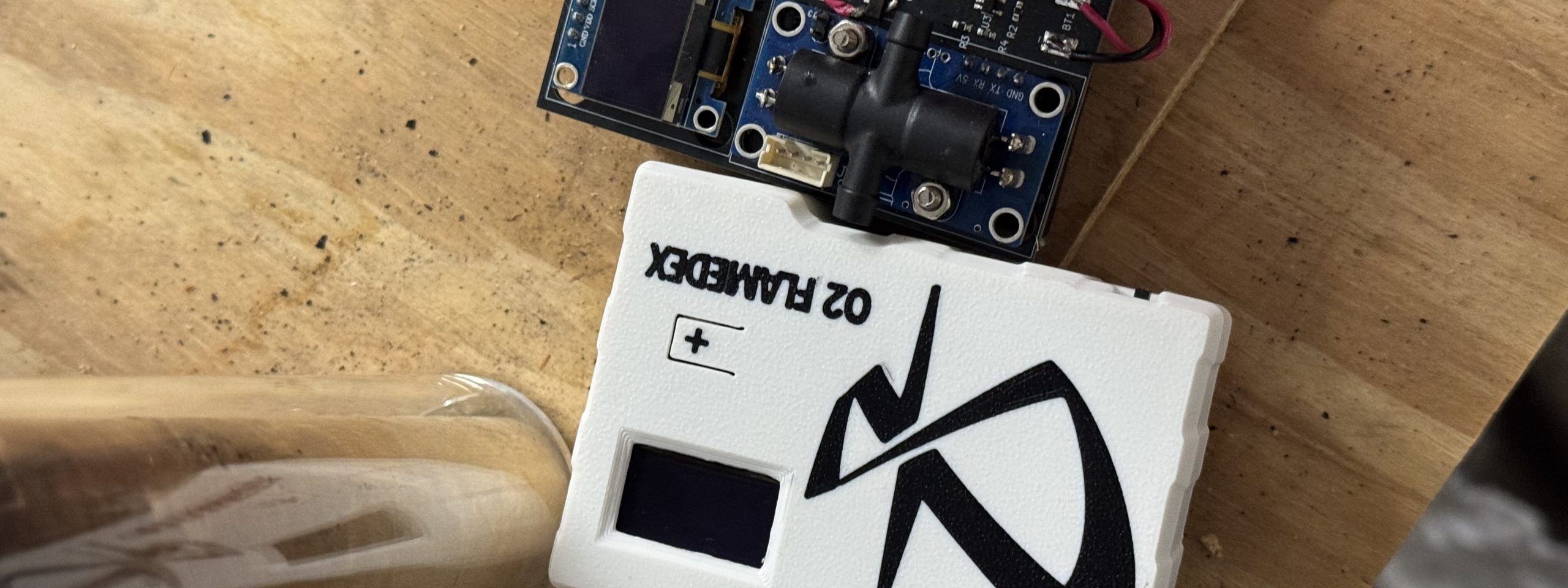
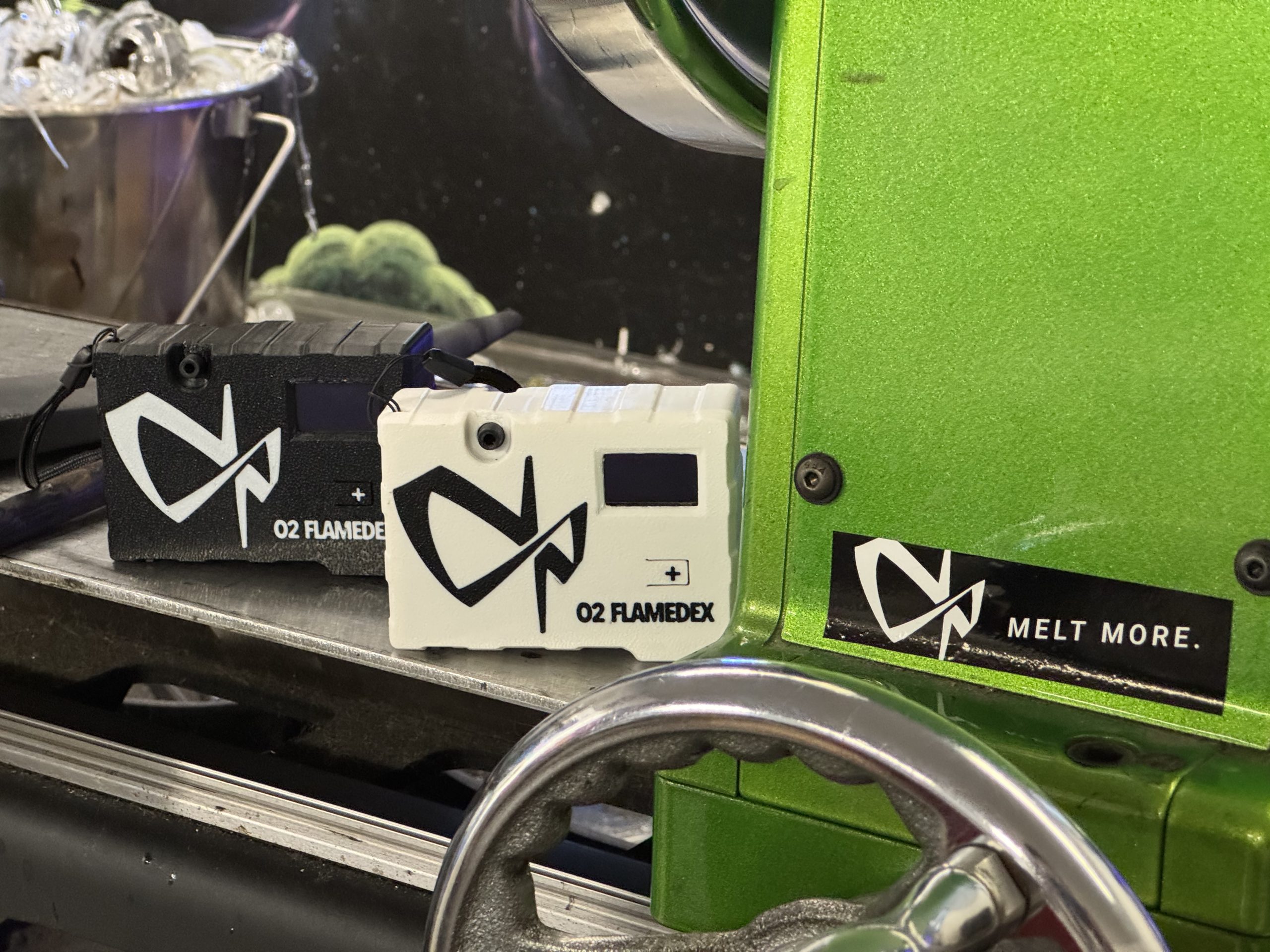
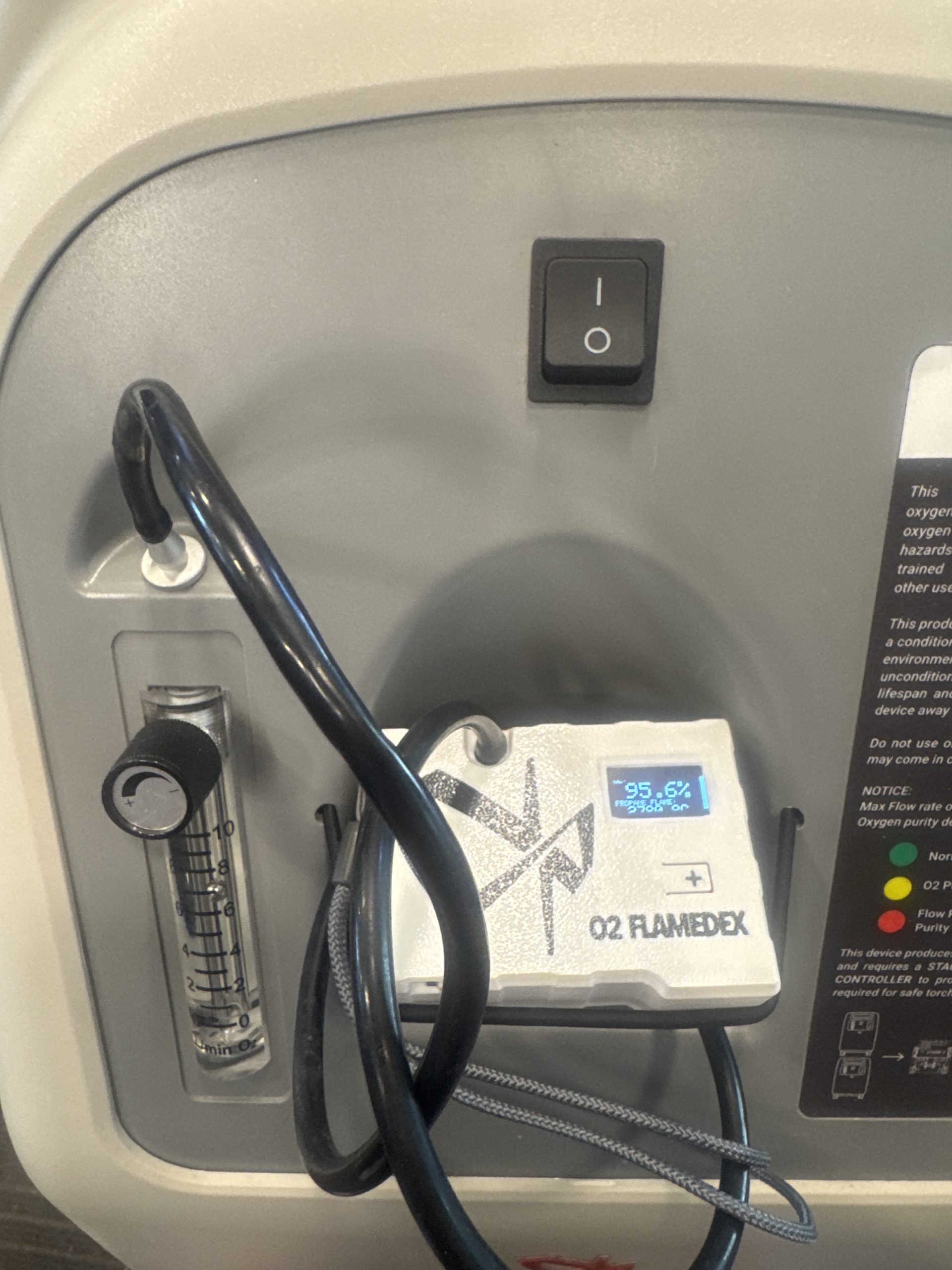
    Introducing: The O2 Flamedex! View oxygen purity and resulting maximum flame temperatures in Celcius and Farenheit. Runs on 3xAA batteries.

    When it comes to oxy-fuel cutting and welding, oxygen purity isn’t just a number — it’s the backbone of consistent performance. If oxygen purity dips, flame temperature drops, cut quality suffers, and operations become less efficient. Traditionally, ensuring that purity meant relying on expensive and maintenance-heavy analyzers. That’s about to change.

    DPG Supply is proud to introduce a new, lower-cost oxygen purity meter built on self-calibrating ultrasonic technology. This innovative approach provides reliable readings for PSA oxygen purity monitoring used in torch applications — without the complexity or cost of legacy analyzers.


    Understanding Oxygen Purity Measurement Technologies

    Before diving into why ultrasonic is a game-changer, it helps to understand the conventional technologies used to measure oxygen purity and why they can be expensive to own and operate.

    1. Electrochemical / Galvanic Sensors

    Electrochemical sensors, often found in medical and industrial oxygen analyzers, use a chemical cell to generate a current proportional to oxygen concentration. While relatively affordable, these sensors have a limited lifespan — they consume their internal electrolyte over time and require regular calibration and replacement.

    • ✅ Low initial cost
    • ❌ Drifts over time and needs recalibration
    • ❌ Temperature and humidity sensitivity
    • ❌ Consumable sensor elements increase lifetime cost

    2. Zirconia (Solid-State) Sensors

    Zirconia cells measure oxygen concentration using a heated ceramic element. These analyzers are fast and reliable in high-demand industrial settings, but the heater, precision control electronics, and calibration routines make them costly and more complex.

    • ✅ High temperature stability and fast response
    • ❌ Expensive materials and build
    • ❌ Requires stable reference gas and periodic calibration
    • ❌ Best suited for gas plants or lab environments

    3. Paramagnetic & Lab-Grade Analyzers

    Paramagnetic analyzers detect oxygen’s magnetic susceptibility and provide high precision but come with high upfront costs, sensitive components, and the need for expert maintenance. Even more complex are mass spectrometry or gas chromatography systems — incredibly accurate, but completely impractical for day-to-day torch work.

    • ✅ Excellent accuracy and fast response
    • ❌ High cost and complexity
    • ❌ Requires controlled environments
    • ❌ Overkill for PSA oxygen applications

    Why Ultrasonic Modules Are Changing the Game

    Unlike the technologies above, ultrasonic oxygen purity meters work by measuring the speed of sound through the gas. Because oxygen and nitrogen have different acoustic properties, the device can accurately determine the oxygen concentration by analyzing transit time.

    Our new ultrasonic oxygen purity meter takes advantage of this principle — but with a modern twist: it self-calibrates, minimizing drift and eliminating the need for expensive sensor replacements.

    Key Benefits of Ultrasonic Measurement

    • No consumables: Nothing to replace or degrade over time.
    • Self-calibrating: Maintains accuracy with minimal user intervention.
    • Lower cost: Simpler components mean more affordable pricing.
    • Low maintenance: Ideal for shop or field use.
    • Durable: Resistant to moisture and vibration, making it perfect for PSA systems.

    In PSA torch applications, where oxygen purity typically falls between 90 % and 96 %, this level of precision is more than sufficient to ensure consistent cutting and welding performance in glass — at a fraction of the price of zirconia or paramagnetic analyzers.


    Accuracy Where It Counts

    One common misconception is that lower cost means lower performance. In fact, for most torch work applications, ultra-high precision (±0.1 %) isn’t necessary. A device that can reliably differentiate between, say, 60 %, 75 %, and 95 % purity will deliver actionable insights and ensure optimal torch performance.

    • PSA systems already have a known operating purity range.
    • Oxy-fuel heating has a generous tolerance window.

    Even if the absolute accuracy is ±3 %, your readings remain fully fit for purpose. And because the unit self-calibrates, drift is minimized — no electrode wear, no recalibration gases, no consumable parts.


    Lower Cost, Longer Life

    Traditional oxygen analyzers can require sensor replacements every 12–24 months and frequent recalibration. Our ultrasonic oxygen purity meter is designed for years of operation without consumable parts, which means:

    • Lower total cost of ownership
    • Less downtime
    • Less user training required

    This makes it an ideal fit for small shops, field service providers, and mobile oxygen systems — anyone who needs reliable purity measurement without breaking the bank.

    Visit our Products page to see the full line of gas analysis solutions.


    Designed for PSA Oxygen and Torch Work

    Our ultrasonic purity meter isn’t trying to compete with laboratory-grade analyzers. Instead, it’s optimized for the PSA oxygen systems commonly used in cutting, brazing, and welding. In these environments, what matters most is:

    • ✔ Consistent readings in the 90–96 % range
    • ✔ Minimal maintenance
    • ✔ Simple operation

    And that’s exactly what our self-calibrating ultrasonic module delivers.


    Get Early Access

    We’re excited to bring this new technology to the field. If you want to reduce costs, simplify operations, and get reliable purity measurement for your PSA oxygen system, our ultrasonic oxygen purity meter is the perfect fit.

    Contact us today to reserve your unit or learn more about our upcoming release.

    Learn more about PSA oxygen systems and how they integrate with torch setups.

  • How Pure Can Concentrated Oxygen Get? The Real Limit — and Why PSA Works for Glassblowers

    How Pure Can Concentrated Oxygen Get? The Real Limit — and Why PSA Works for Glassblowers

    Concentrators make enriched oxygen using PSA technology. There’s a natural question: How pure can PSA/Concentrated Oxygen actually get, and does that matter at the bench?

    For glassblowers, oxygen quality shows up in the flame: heat, stability, and how predictably the torch responds when you push your work. Given this importance, why would studios move away from cylinders of 99.9% oxygen to on-site systems built around pressure swing adsorption (PSA or Concentrated Oxygen)?

    The Practical Ceiling for PSA Purity is 96.3%

    In real-world operation, PSA oxygen generators are designed and specified for about 93–96% O₂. That’s not a marketing number—it’s the accepted performance band you’ll see across technical guidance and medical oxygen programs that use PSA plants.

    Why that band? Pushing beyond the mid-90s with PSA quickly forces expensive trade-offs between purity, flow, and stability. Raise purity a couple of points and your available flow typically drops—meaning a larger (costlier) oxygen concentrator system to get the same output.

    Why Concentrators (PSA) Can’t Hit 100%: The Argon Problem

    PSA beds (zeolites – the stuff inside of oxygen concentrators doing the magic) are excellent at holding back nitrogen while letting oxygen pass. But argon—about 0.9% of ambient air—behaves a lot like oxygen in this process and tends to slip through with it. That’s why most PSA streams top out in the mid-90s: you’ve removed the nitrogen efficiently, but a small fraction of argon remains.

    What that means at the torch

    For artistic and functional glasswork, 93–96% PSA oxygen is more than hot enough for stable, repeatable flames on common torches. In practice, the bigger wins for glassblowers come from supply consistency and economics: no delivery gaps, no cylinder swaps mid-project, and a predictable cost per hour.

    If you’re considering the switch, start by looking at system architecture and how it fits your studio:

    PSA vs. “near-pure” alternatives

    Could you chase 99.5%+? Yes—cryogenic oxygen or multi-stage PSA hybrids can get there, but they come with plant-scale cost, more complex controls, and longer startup dynamics. That’s why PSA is often called the most cost-effective way to get close to pure oxygen at useful volumes without plant-sized equipment. For most glass studios, the mid-90s purity band delivers the best combination of flame performance, uptime, and total cost of ownership.

    Sizing your setup for real studio workloads

    Two practical steps help you right-size a PSA-based system:

    1. Quantify your run time and peak draws with the Oxygen Runtime Calculator.
    2. Cross-check burner requirements using the Lampworking Torch Data.

    Once you have a rough profile, match it to a compression model and storage strategy:

    For specifics on noise, warranty, or common fit questions, see the FAQ and Warranty.

    Why this approach scales with you as a professional artist

    Your demand may grow—from solo bench time to multi-artist production. PSA is modular by design: add concentrators, expand storage, and let the compression stage handle the duty cycle. That’s the path most studios take to eliminate refill logistics while keeping flame behavior consistent day to day. For a quick orientation to the company and user community, see About Us and Our Artists.

    Bottom line

    • Maximum practical PSA purity: about 93–96% O₂.
    • Reason: argon behaves like oxygen in standard PSA beds, creating a hard limit without costly extra stages.
    • Best fit for glassblowers: on-site PSA provides stable, hot flames with far better economics and uptime than cylinder delivery for most studios.

    If you want help mapping purity, flow, and storage to your torch lineup, we can put numbers to it and recommend a build. Start here:


    Sources for the purity limit and trade-offs

    • WHO / technical guidance on PSA output: oxygen 93% ± 3% and performance considerations. Iris+1
    • Argon carry-through in PSA and practical purity ceilings near ~95%. nzic.org.nz+1

  • DIY Oxygen Concentrator Projects with Open-Source Designs

    DIY Oxygen Concentrator Projects with Open-Source Designs

    Watch How A DIY Oxygen Concentrator is Made

    If you’ve ever wanted to understand how a PSA-based oxygen concentrator works — or even build one yourself — the above videos offer clear, step-by-step examples. This is more than a DIY tutorial: it’s a working blueprint for builders, technicians, and system designers who want insight into how oxygen generation systems are put together.

    Hyperspace Pirate’s video covers another approach to at home Oxygen Concentration. We sent him some Zeolite to complete his project and were impressed with his home made machine.

    How the PSA Process Separates Oxygen

    The system uses Pressure Swing Adsorption (PSA) — the same core principle used in many commercial oxygen generators. Here’s the process simplified:

    StepProcessWhat Happens
    1Pressurize airAmbient air (≈ 78% N₂, 21% O₂) is fed into the system.
    2Nitrogen adsorptionZeolite in the sieve bed traps nitrogen molecules at pressure.
    3DepressurizationReleasing pressure purges nitrogen from the bed.
    4Bed cyclingOne sieve bed absorbs while the other regenerates, providing continuous O₂ flow.

    “With PSA, you don’t create oxygen — you isolate and concentrate it. The smarter your cycle timing and air prep, the cleaner your product gas.”

    Oxikit video, 7:15

    Core Components of the Build

    ComponentPurposeUpgrade Tip
    Air compressorPressurizes ambient airUse oil-free or filter downstream
    Condenser coilCools compressed airStainless steel improves durability
    Coalescing filterRemoves oil/moistureEssential for protecting sieve beds
    Desiccant dryerRemoves humidityInline cartridges are easy to replace
    Solenoid valvesControls flow timingLook for high cycle life ratings
    PVC sieve bedsHolds zeoliteProper packing = better performance
    Control systemManages cyclesPLC or microcontroller options

    Explore compressors, filters, and valves at DPG Supply to match this DIY build with tested components.

    This doesn’t work with a single sieve bed – dual sieve beds required!

    • Dual sieves provide continuous oxygen output with minimal drawbacks.

    “Many commercial PSA systems use two or more beds to balance flow and purity. This design mirrors that logic on a smaller scale.”

    Talk to DPG Supply about control valves, check valves, and automation modules to fine-tune your cycle timing.

    Pro Tips for Reliable Operation

    • Dry air is essential — moisture will degrade your zeolite quickly.
    • Stable pressure = stable purity. Avoid compressor fluctuations.
    • Control your purge cycle to conserve energy.
    • Use high-quality fittings to reduce leaks and maintenance issues.
    ParameterDIY TargetNotes
    Pressure15–25 psiHigher pressure improves adsorption but requires better sealing
    Zeolite type13X or LiXImpacts purity and cycle time
    O₂ purity85–95%Dependent on flow rate and timing

    Looking to do something similar to this design? Check out DPG Supply’s concentrator components and parts.

    If an off-the-shelf oxygen concentrator solution is more your style, check out the Stage 1 Oxygen Generator.


    Disclaimer: This DIY oxygen concentrator design is for educational and non-medical use. For medical-grade oxygen delivery, consult certified equipment suppliers and follow regulatory requirements.

  • Replacement Knob for High Pressure Tanks – 3D Print File Free Download

    Replacement Knob for High Pressure Tanks – 3D Print File Free Download

    Oxygen, Argon, CO2, Nitrogen and other compressed gasses come in high pressure bottles. Most people use K sized tanks before upgrading to an oxygen compression system. Myself included.

    In the process of moving and storing tanks, their handles sometimes become damaged. One of the few components of a high pressure tank that are safe to service is this handle.

    I modeled a new handle to print on a 3D printer. Download it here:

    Editor Note: After testing – this is not a very durable handle. Download with caution.

    Removing the handle should only be done when the tank is empty.

    These handles were compatible with old Linde tanks with Fine Thread 3-1/8 collars. The recess accommodates a spring and cap.

    Use this file with caution.

    See below for a few images of where the spring, cap and nut go.

  • Bistabil – What does it mean, where does the name come from, and what you need to know

    Bistabil – What does it mean, where does the name come from, and what you need to know

    The term “Bistabil” in the context of glassware refers to a specific type of ground glass joint characterized by thicker walls on both the inner and outer surfaces of the grinding area. This design enhances the joint’s durability and stability, making it suitable for applications requiring robust connections.

    Origin and Usage

    Thick Walls and consistent thickness are hallmarks of Bistabil ground glass joints.

    Characteristics of Bistabil Joints

    • Heavy-Wall Construction: These joints are manufactured using thicker tubing, resulting in increased wall thickness compared to standard joints. This construction provides enhanced mechanical strength and resistance to thermal stress. (ACCUGRIND (PRECISION) GROUND GLASS JOINTS)
    • Enhanced Stability: The increased mass and rigidity of Bistabil joints contribute to a more stable connection between glassware components, reducing the risk of breakage during assembly or use. (1040-HEAVY WALL GROUND MALE (BISTABIL) JOINTS)
    • Standardization: Despite the variations in wall thickness, Bistabil joints maintain standardized taper dimensions (e.g., 14/23, 19/26), ensuring compatibility with other glassware components of the same nominal size . (ACCUGRIND (PRECISION) GROUND GLASS JOINTS)

    Applications

    Bistabil joints are commonly used in laboratory settings where enhanced durability and stability are required, such as in: (1040-HEAVY WALL GROUND MALE (BISTABIL) JOINTS)

    • High-Temperature Reactions: Their robust construction makes them suitable for processes involving significant thermal cycling.
    • Vacuum Systems: The thicker walls provide better resistance to implosion under reduced pressure conditions.
    • Mechanical Stress Scenarios: They are ideal for setups where joints may experience mechanical strain or need to support heavier apparatus.

    In summary, while “Bistabil” began as a proprietary term, it has evolved into a generic descriptor within the glassware industry, signifying ground glass joints with enhanced wall thickness for improved performance in demanding applications.