
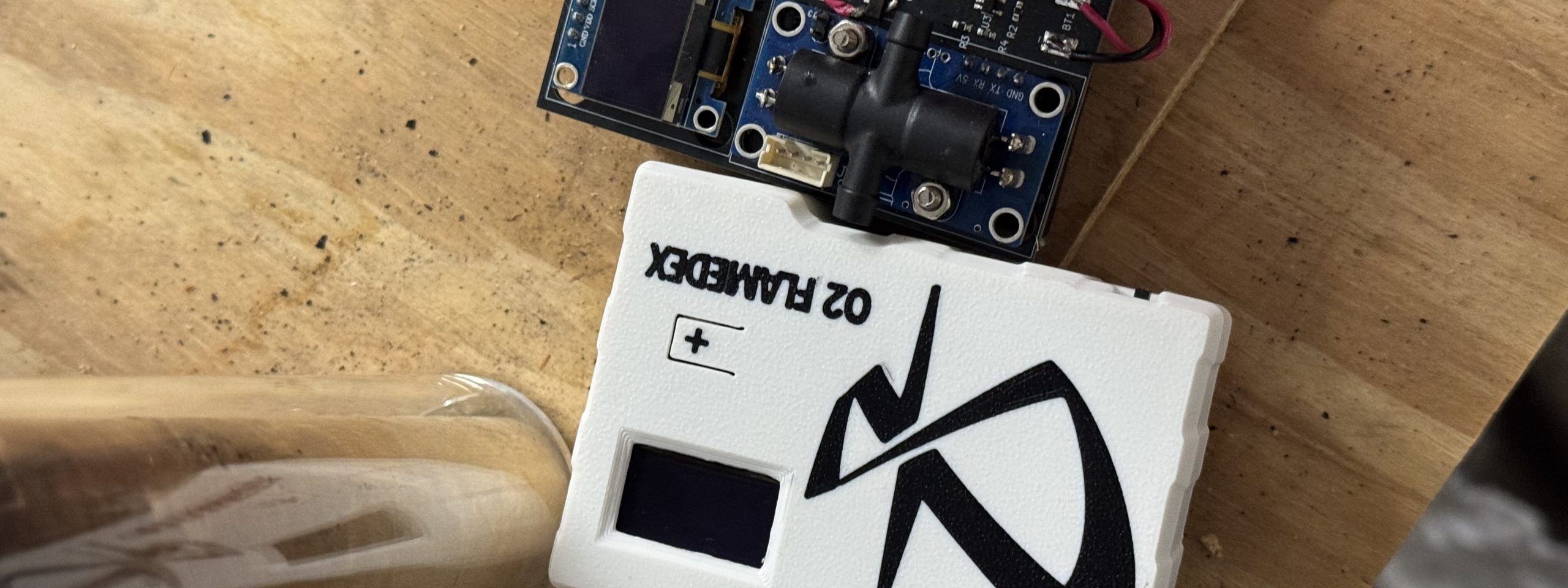
If you use a PSA oxygen system for glass, metal, or flame work, you’ve probably wondered how to verify the purity coming off your concentrators and into storage. We’re introducing a lower-cost, self-calibrating oxygen purity meter that uses an ultrasonic module (speed-of-sound) rather than the typical electrochemical, paramagnetic, or zirconia techniques. This post explains the differences, where the cost savings come from, and why the accuracy trade-offs are a non-issue for PSA oxygen used in torch work.
TL;DR: For Stage 2 compression + storage systems and similar PSA setups producing ~93–96% O2, an ultrasonic purity meter provides stable, maintenance-light readings without consumable cells—ideal for monitoring trends, diagnosing setup issues, and confirming system performance. If you’re chasing 99.9% O2 for spectroscopy or laser cutting, that’s a different toolbox; for flame work, ultrasonic is the practical win.
First, context: What “purity” really means with PSA oxygen
Single-stage PSA oxygen generation delivers a practical ceiling in the mid-90s (% O2) because argon rides through the sieve beds with oxygen. That’s normal—and perfectly suitable for flame work. If you’re new to PSA purity, start here:
- How pure can PSA oxygen get (and why that works for glassblowers)?
- See how purity management is handled in our systems: Stage 2 Features
- Explore Stage 2 SOLO, DUO, and PRO models
The common ways to measure oxygen purity (and their trade-offs)
| Technology | How it works | Pros | Cons | Typical fit |
|---|---|---|---|---|
| Electrochemical (galvanic cell) | O2 reacts at a cathode/anode and generates current proportional to O2 partial pressure. | Low upfront cost; familiar; decent accuracy in the PSA range. | It’s a consumable—lifespan shortens with higher O2/temperature; periodic replacement & calibration required. | Portable analyzers; medical devices; general monitoring. |
| Paramagnetic | Measures how oxygen (paramagnetic) is attracted in a magnetic field. | Non-depleting; fast response; high accuracy and stability. | Higher cost; needs good flow/sample handling; more complex packaging. | Process control; lab-grade monitoring. |
| Zirconia (ZrO2) | Heated ceramic cell measures O2 partial-pressure via ion conduction. | Wide range; robust in hot/exhaust environments. | Requires heaters (>300 °C); power draw; pricier probes; warm-up time. | Combustion control, furnaces, engines. |
| Ultrasonic (our approach) | Infers composition from the gas’ speed of sound between transducers; compensates for temperature/pressure/humidity. | Solid-state; no consumables; quick warm-up; inherently stable; lends itself to self-calibration against ambient air. | Requires good compensation for humidity/temperature and steady flow; absolute accuracy depends on calibration method. | PSA systems, trend monitoring, long-term shop use. |
Why we chose ultrasonic for PSA oxygen in torch work
- No consumables to replace. Electrochemical cells age and need periodic swap-outs. Our ultrasonic module is solid-state, so ongoing costs are lower—one of the key reasons we can price this device more affordably.
- Self-calibration against ambient air. Before use, the meter can reference outdoor/room air (≈20.9% O2) to confirm scale and temperature compensation—no bottled calibration gas required.
- Accuracy that matches the application. In a PSA band of ~93–96% O2, what matters most for a torch is consistency and diagnostics, not chasing 99.9%. Small percentage-point swings won’t change how your flame behaves on common torches. (Cross-check with our Lampworking Torch Data and model selection on the Oxygen Runtime Calculator.)
- Lower system complexity. Paramagnetic and zirconia analyzers are excellent but add cost and integration overhead that doesn’t translate into practical benefits at the bench for PSA users.
Where ultrasonic shines in the studio
- Commissioning: Verify that your Stage 1 concentrators and Stage 2 purity controls (e.g., Pre-Vent) are doing their job before storing gas.
- Trend monitoring: Watch purity over time to catch clogged filters, tired sieve beds, or incorrect valve timing early.
- Troubleshooting: If your flame feels “off,” a quick purity check alongside runtime/pressure data helps isolate the issue.
Accuracy & limitations (straight talk)
Any oxygen analyzer is only as good as its sampling and compensation. Our ultrasonic meter measures temperature and uses humidity/flow best-practices to keep readings stable in the PSA range. For industrial torch work, you want repeatable numbers and alarms around thresholds—not lab-grade metrology. If you do need more stringent verification, we’re happy to recommend workflows that pair our ultrasonic meter with a periodic cross-check device.
Cost-of-ownership: why this meter is more affordable
- No sensor cartridges to replace (unlike galvanic cells).
- No heaters or magnetic assemblies to drive (unlike zirconia or paramagnetic analyzers).
- Shop-ready packaging designed for the realities of flame work, not clean-room lab benches.
If you’re running delivered cylinders or LOX and considering PSA, take a look at the math: Stage 2 ROI breakdown and How much is your oxygen costing you?
What “good” looks like on PSA
Healthy PSA setups consistently store oxygen above 95% (with argon making up most of the balance). Our Stage 2 Features like adjustable Pre-Vent are designed to vent initial impurities so you only store the good stuff. If you’re sizing or upgrading, compare SOLO, DUO, and PRO, or read our overview of oxygen systems.
Related reading on DPG
Availability & next steps
Our ultrasonic oxygen purity meter is designed for industrial use only (not medical) and pairs perfectly with the Stage 2 compression platform. Want early access or to discuss your setup? Contact an oxygen system specialist.
Leave a Reply